Streamer timing diagrams
These diagrams summarize the observable timing conventions of the PulsePins streamer output and trigger path. They are idealized documentation diagrams derived from the RTL behavior and existing directed streamer testbenches, not measured logic-analyzer captures.
The main RTL references are streamer.sv, output_fifo.sv, and chain_trigger.sv.
The WaveDrom sources live under docs/wavedrom/streamer/. Regenerate the checked-in SVGs with:
make -C docs timing-diagrams
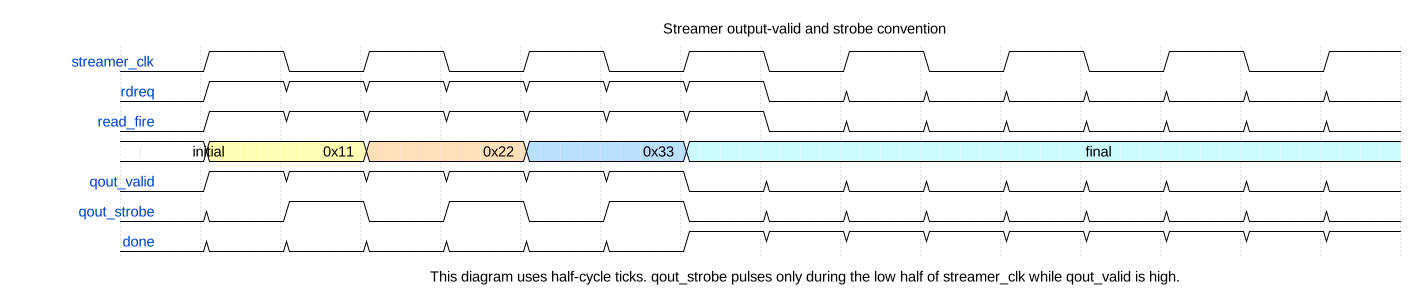
Output-valid and strobe convention
qout updates on rising edges of streamer_clk when the output FIFO supplies a data or final element. qout_valid marks ordinary data samples. qout_strobe is generated as qout_valid & ~streamer_clk, so it appears during the low phase of streamer_clk.
Sequence shown: ordinary data samples 0x11, 0x22, and 0x33, followed by a final element that leaves the final value visible and asserts done because no prior buffer_error occurred. Only the ordinary data samples assert qout_valid and qout_strobe.
RTL points:
qout_validis registered inoutput_fifo.svfromvalid = data_update && !is_no_strobe.qout_strobeisqout_valid & ~rdclk.- A final element updates
qoutand can assert cleandoneif no priorbuffer_erroroccurred, but it is not a valid data sample.
Forced trigger with a closed gate
Trigger activation and gate opening are separate conditions. In streamer.sv, the output FIFO read request is:
assign rdreq = trigger_activated && gate_enable;
If the trigger is forced while the gate is closed, trigger_activated can assert, but the output FIFO does not advance until gate_enable becomes high.
Sequence shown: 3 streamer_clk samples of 0x11, then 2 samples of 0x22, followed by a final element that leaves qout at 0x33. The trigger is forced while the gate is still closed; output advancement starts only after gate_enable rises.
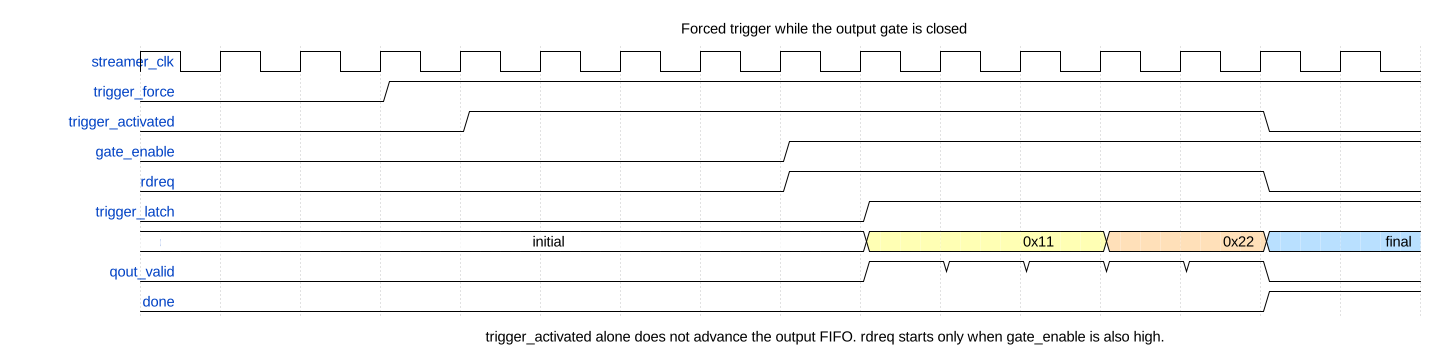
This mirrors the directed gating test in tb7.sv.
Gate pause and resume
Gating is an output-side pacing mechanism. Closing the gate during playback stops new FIFO reads. The visible qout bus holds its previous value, while qout_valid and qout_strobe stop marking new samples.
Sequence shown: 3 samples of 0x11, 2 samples of 0x22, 2 samples of 0x44, followed by a final element that leaves qout at 0x55. The gate closes after the first 0x22 sample, so qout holds 0x22 while the gate is closed; the second 0x22 sample is emitted after the gate reopens. The read_fire && is_last marker is the output-FIFO event that writes the final value and, on clean runs, asserts done on the same streamer_clk edge.

This is the convention checked by tb9.sv. Consumers should use qout_valid or qout_strobe to detect advancement; qout itself may remain at the last value while the gate is closed.
Multi-stage trigger chain
Trigger elements are loaded from the same encoded input stream as data elements, but they are consumed by chain_trigger.sv rather than by the output decoder. The trigger chain runs in streamer_clk and advances through IDLE, LOAD, WAIT, and TRIGGERED states.
Trigger program shown: match 001, then 010, then final stage 100. No qout data sequence is emitted in this diagram; it shows only trigger-chain loading, matching, and final trigger assertion.
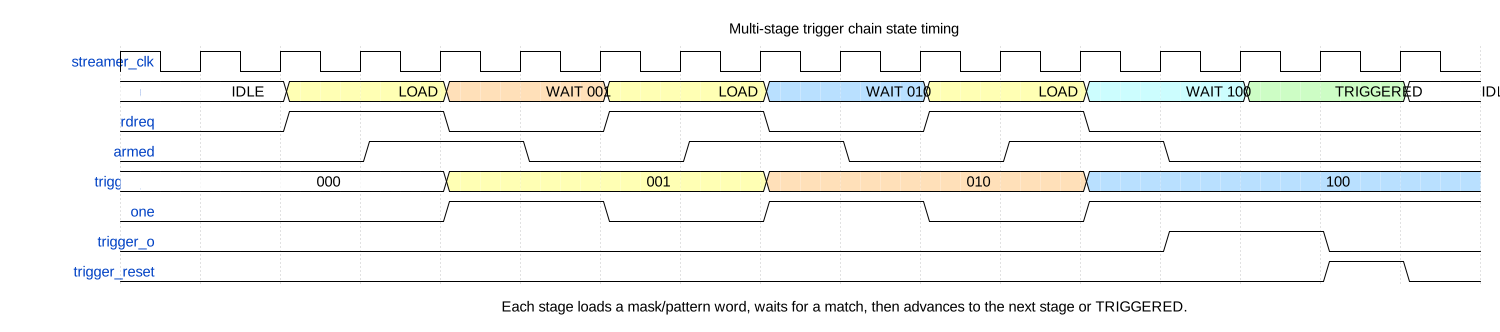
The direct trigger-chain test is tb_chain_trigger/tb.sv.
Retrigger flow
A retrigger element pauses output progression by discarding the just-satisfied active trigger stage and returning the trigger chain to idle. The sequence can then wait for the next queued trigger condition and resume from the following output elements. This differs from the runtime trigger_reset signal, which preserves the active trigger stage and re-arms the same condition after reset is released.
Sequence shown: the first trigger releases an output burst of 0x12345678 samples, then a retrigger element pauses progression. A second trigger releases 0x87654321 samples, followed by a final element.

This behavior is tested by tb5.sv. The key internal relationship is retrig = retrig_requested && trigger_o in streamer.sv.
No-strobe and final elements
BIT_NO_STROBE suppresses qout_valid and qout_strobe, but it still updates the qout data bus. A final element also updates qout; on clean runs it asserts completion through done rather than producing a valid data sample.
Sequence shown: a no-strobe element updates qout to 0x55 without asserting qout_valid, then a normal data element emits 0xaa with qout_valid and qout_strobe, then a final element leaves qout at 0xcc and, because no underrun occurred, asserts done.
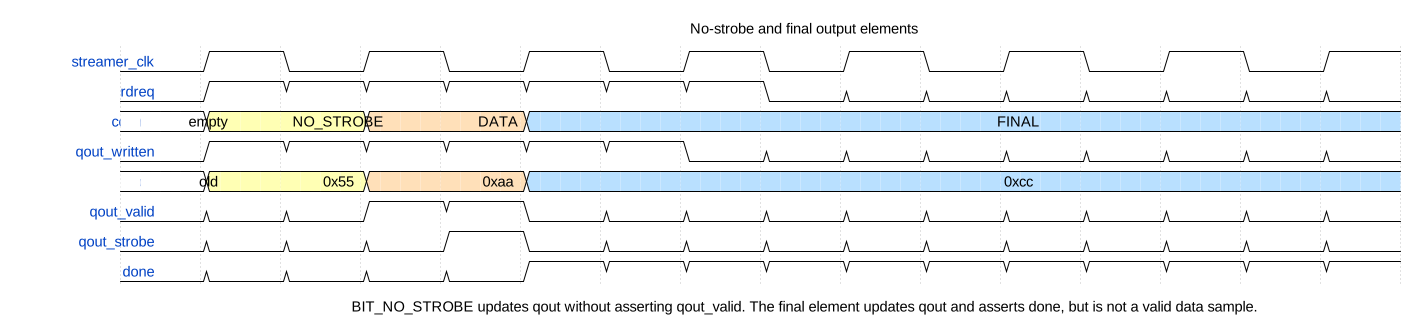
The direct output-FIFO regression is tb11.sv, and final-output behavior is covered by tb6.sv.
Reading the diagrams
The diagrams intentionally show short, readable examples. Exact cycle counts around FIFO availability and trigger-program loading can vary with the chosen clock relationship and FIFO state. The stable conventions are the ownership of output timing by streamer_clk, the rdreq = trigger_activated && gate_enable gating rule, the qout_valid sample qualifier, and the low-phase qout_strobe convention.